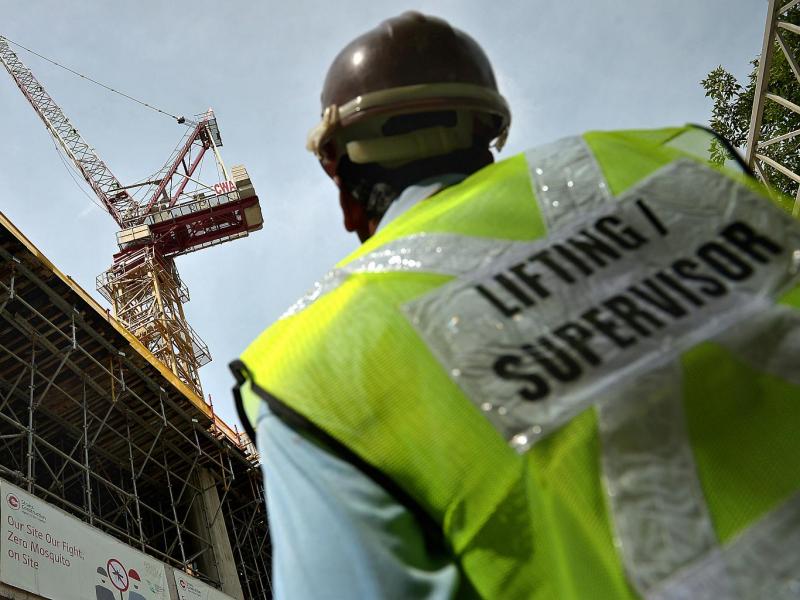
Guidebook for Lifting Supervisors
The Guidebook for Lifting Supervisors published by the Workplace Safety and Health Council (WSH Council) Singapore provides practical guidance for supervising lifting operations safely. It clarifies what lifting supervisors must do before, during and after lifting activities to prevent incidents such as dropped loads, crane instability, rigging failure and uncontrolled load movement.
Cranes for You includes this guide in the Knowledge Centre because strong lifting supervision is a decisive safety barrier. Even when a lift plan exists, unsafe execution, poor communication or uncontrolled changes on site can quickly escalate risk. This guide helps lifting supervisors apply structured control on the worksite and supports consistent compliance with recognised safety expectations.
Summary of the Guidebook
The guidebook focuses on the lifting supervisor’s duties, authority and practical actions. The Appointed Person role and responsibilities encompasses overall planning authority and technical decision-making, providing the structured control that supervisors rely on to ensure lift plans are executed correctly. Core elements typically include:
- Role and accountability: The lifting supervisor is responsible for supervising lifting operations and ensuring that lifting is carried out safely according to the approved plan and site conditions.
- Pre-lift preparation: Verifying the lift plan / method statement, confirming load information, checking that lifting gear is suitable and certified, and ensuring the work area is ready (ground conditions, access, exclusion zones).
- Competence and briefing: Ensuring the lifting team (operator, rigger, signalman/banksman) is competent and that a toolbox talk/briefing is conducted so everyone understands the sequence and controls.
- Crane and lifting gear checks: Confirming that required inspections and pre-use checks have been completed and that defects are managed before lifting starts.
- Communication and signalling: Establishing a clear signalling method, appointing a single signalman where applicable, and ensuring communication works reliably for the entire lift.
- Control during execution: Monitoring crane setup and stability, rigging configuration, load behaviour and adherence to the planned route and sequence.
- Managing changes: If conditions change (weather, ground, obstructions, load details, personnel), the lift must be paused and reassessed before proceeding.
- Stop-work authority: Reinforcing the supervisor’s duty to stop the operation immediately when unsafe conditions or unsafe acts are observed.
- Post-lift learning: Recording issues, near misses and lessons learned to improve future lifts and supervision quality.
Practical Relevance in Lifting Operations
Applying this guidebook supports safer day-to-day lifting by:
- Strengthening execution control: ensuring the lift plan is applied correctly on site
- Reducing human-error exposure: clear roles, briefings and communication protocols
- Improving consistency across crews and contractors through standard supervision steps
- Preventing unsafe continuation under changing conditions via stop-work discipline
- Supporting compliance and audit readiness through clear expectations and records
- Raising supervision quality for routine and complex lifts alike
This guidance is highly relevant for construction, industrial maintenance, logistics and heavy lifting projects—anywhere lifting supervisors must coordinate multiple parties and safety-critical decisions in real time.
Official Source
This guidance is published by the Workplace Safety and Health Council (WSH Council), Singapore, under the title Guidebook for Lifting Supervisors.
Related Knowledge Articles
- Safe Lifting: Why Every Lift Requires a Lift Plan
- Hoisting and Rigging Safety Manual
- Step Change – Lifting and Mechanical Handling Guidelines
- CPA – Maintenance, Inspection & Thorough Examination of Mobile Cranes
Ready to Improve Safety and Efficiency?
Effective lifting supervision turns procedures into safe execution.
Download the WSH Council Guidebook for Lifting Supervisors from this page and integrate its approach into your lifting supervision practice, toolbox talks and on-site controls.