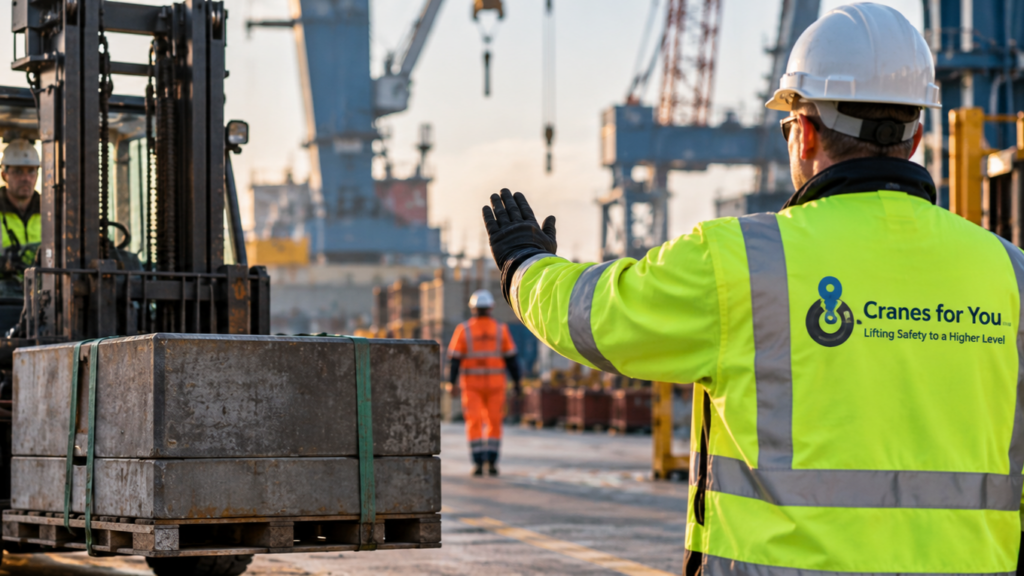
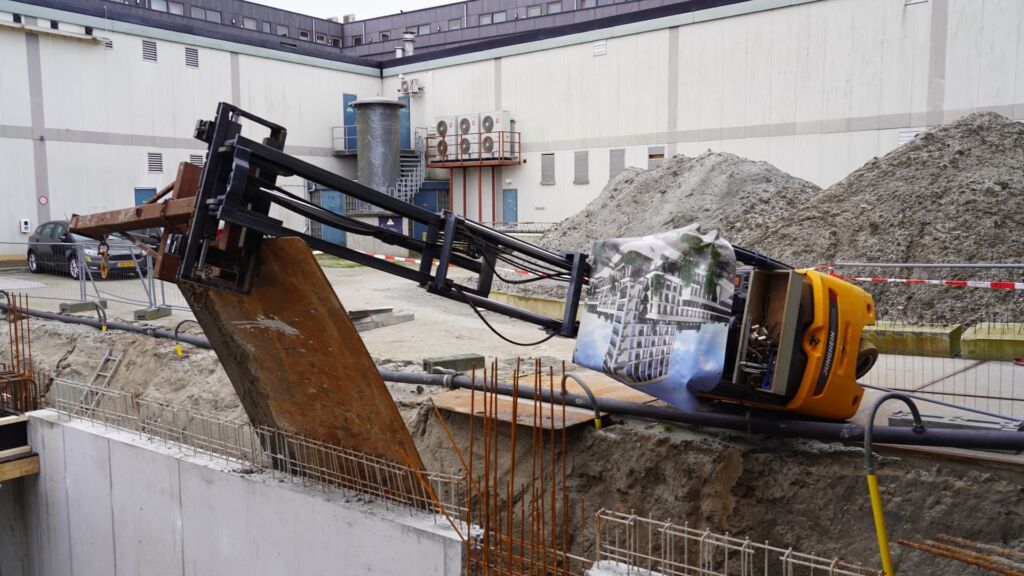
Safe Forklift Operations: Why a Forklift Certificate Alone Is Not Enough
Forklifts are widely used in industrial, logistics, construction and production environments. A competent operator and technically sound equipment are essential, but they are only part of a safe operation.
The Dutch Labour Inspectorate (Nederlandse Arbeidsinspectie) recently published its Monitor Arbeidsongevallen 2025, including a dedicated analysis of collisions involving forklifts and comparable mobile work equipment. The findings demonstrate why forklift safety requires more than operator training alone.
Cranes for You includes this subject in its Knowledge Centre because the same principle is fundamental to safe lifting and mechanical handling: safe operations require competent people and suitable equipment, but also proper risk assessment, planning, organisation and effective supervision.
Summary of the Accident Monitor
Between 2020 and 2025, the Dutch Labour Inspectorate investigated 309 reportable occupational accidents involving collisions with forklifts and comparable mobile work equipment, resulting in ten fatalities.
The findings show that many accidents involved operators and pedestrians failing to notice each other in time. The Inspectorate therefore emphasises the importance of workplace organisation, traffic management, instruction, planning and supervision, alongside technical safety measures.
Although these were collision accidents rather than necessarily lifting accidents, the findings reinforce a fundamental safety principle: safe operation requires control of the complete working environment, not only control of the machine.
Practical Relevance
The findings of the Accident Monitor highlight several important considerations for organisations using forklifts and other mobile work equipment:
- Operator competence is not enough
A trained operator and technically sound forklift are essential, but cannot compensate for inadequate workplace organisation or unsafe operating conditions. - Risk assessment (RI&E)
Dutch employers must assess forklift-related hazards through their RI&E, including pedestrian interaction, traffic routes, visibility and non-routine operations. - Company procedures and operating rules
Risk assessment findings should be translated into practical workplace rules, traffic management arrangements or a dedicated Forklift Safety Procedure. - Proper planning of lifting operations
Article 7.18a(8) of the Dutch Working Conditions Decree requires lifting and hoisting operations within its scope to be correctly planned to ensure worker safety. - Effective supervision
Article 7.18a(9) requires these operations to be performed under effective supervision. Responsibilities and authority must therefore be clearly established. - Appointed Person / Person In Charge
For lifting operations, an Appointed Person can coordinate the overall planning and control of the operation, considering people, equipment, load, environment and associated risks.
Official Sources
- Monitor Arbeidsongevallen 2025
Dutch Labour Inspectorate — findings on collisions involving forklifts and comparable mobile work equipment. - Arbeidsomstandighedenwet — Article 5
Statutory requirements for the Risk Inventory and Evaluation (RI&E) and associated Plan of Action. - Arbeidsomstandighedenbesluit — Article 7.18a
Requirements concerning lifting equipment for non-guided loads, including planning and effective supervision.
Related Knowledge Articles
- Safe Lifting: Why Every Lift Requires a Lift Plan
- Safe Lifting: The Role of the Appointed Person
- Overview of Lifting and Hoisting Related Standards
- Safe Hands Lifting Policy
Ready to Improve Forklift Safety in Your Organisation?
A forklift certificate alone does not guarantee safe operations. Clear, practical procedures are essential to controlling risks and ensuring that forklift operations are carried out safely.
Cranes for You can review and update your existing Forklift Safety Procedure or develop a new, company-specific procedure, tailored to your operations, workplace conditions and identified risks. This includes traffic management, pedestrian safety, operating rules, responsibilities and supervision.
Does your forklift procedure need updating, or does your organisation need a new one?
Contact Cranes for You to discuss your requirements.